Founder letter
From projects to methods
Turning one-off work into repeatable practice
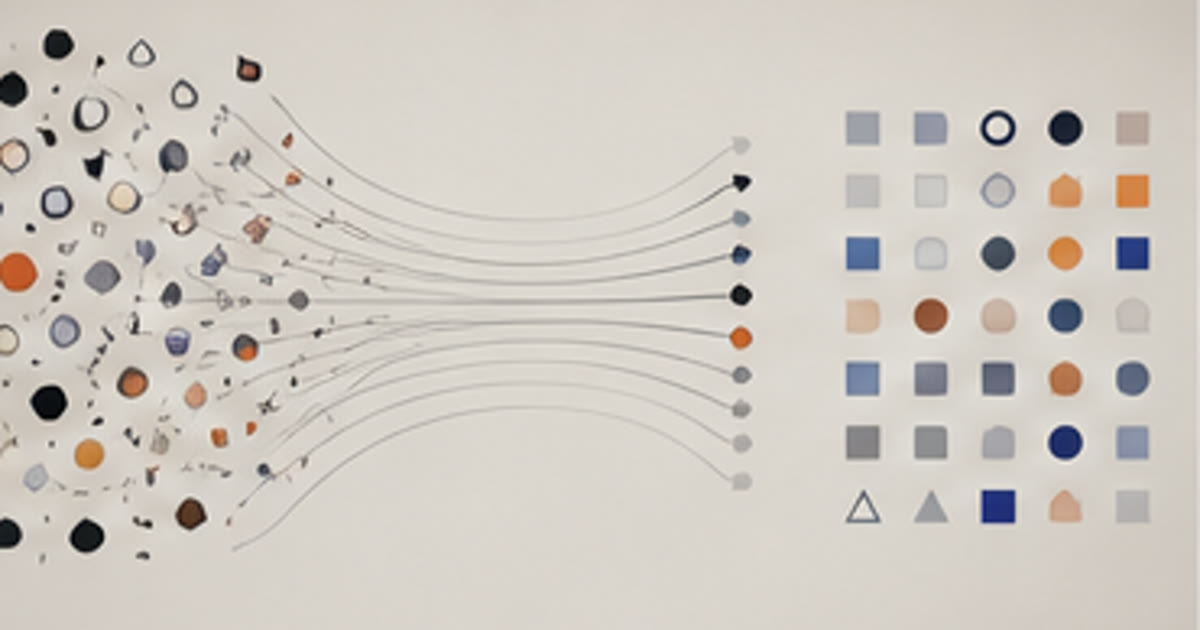
The first phase is always projects
You start with what you can actually do. A specific thing, for a specific reason, in a specific moment. You do not have a methodology at the beginning: you have a problem in front of you and whatever tools are to hand. The work begins as project work because it has to.
This is not a failure of ambition. It is the honest shape of early experimentation. You cannot extract a method from nothing. Methods come from doing the thing first, badly or well, and then looking hard at what actually happened. The project is how you generate the raw material. The method is what you learn from it.
Mustard Seed Group has been in that first phase. The work has been real, genuinely real, not simulated, but it has been necessarily one-off. You learn the edges of a problem by colliding with them. You do not know what is repeatable until you have done something enough times to notice patterns.
August 2016 feels like the right moment to be honest about that maturation. Not because the method work is finished, it is not, but because the question has shifted. We are no longer asking whether any of this is possible. We are asking how to make it consistent.
What a project teaches you
The temptation, finishing a piece of work, is to bank the outcome and move on. The thing got done. The client is satisfied, or the feature shipped, or the system runs. That is the natural stopping point if you are optimising for throughput.
But a project that ends without extraction is a project that has to be re-learned from scratch next time. You carry tacit knowledge in your head, some intuition about what worked and why, but that knowledge does not compound. It does not transfer. It sits in one person's experience and dissipates when the context changes.
What a project actually teaches you, if you debrief it seriously, is a set of conditions. The conditions under which a particular approach worked. The variables you would need to hold constant to produce a similar result. The failure points you hit and how you navigated around them. That conditional map is the beginning of a method.
The difference between a project-based organisation and a method-based one is not the quality of the work. It is what happens to the knowledge afterwards. Projects consume knowledge. Methods accumulate it.
The delivery question and TUXX
TUXX sits at the commercial edge of this. As the services arm, the part of the portfolio that engages with live client environments, it faces the delivery question most directly.
Custom software and AI systems work is difficult to productise in the conventional sense. Every engagement has a different context, a different set of constraints, different people with different fluency levels, different ideas about what done means. The project model accommodates that heterogeneity. You scope to the situation, you deliver to the situation, you charge for the situation.
But the project model also has a ceiling. If every engagement is genuinely bespoke, a fresh start every time, you never build leverage. Your capacity scales with headcount and nothing else. The economics never improve. You are renting out time rather than compounding on insight.
The delivery method question is: what can be made consistent? Not the outputs: those will always vary with context. But the process of arriving at outputs. The diagnostic step. The decision points. The handoff logic. The review criteria. The failure modes to anticipate. If those can be standardised, not rigidly templated, but reliably shaped, then each engagement builds on the last rather than starting from zero.
Pattern Up, the TUXX sub-product oriented toward process structure, is an attempt to hold some of that consistency. The name reflects the aspiration precisely: you are not delivering one-off work, you are laying down patterns that can be re-used. The project becomes the test environment for the pattern. The pattern becomes the leverage that makes the next project faster and better.
This is early-stage thinking, not a finished system. But the framing matters. It changes what you are looking for during the work.
The workflow question and Orbit
Orbit faces a different version of the same problem. If TUXX's core question is about delivery, how do you consistently execute work for others, Orbit's question is about workflow: how do you consistently execute commercial work for yourself.
The lead-to-launched product cycle is long and multi-part. There is identification, qualification, conversation, proposal, scoping, delivery, handoff, follow-on. Each stage has different information requirements, different decision criteria, different relationships between the people involved. The temptation is to use a generic CRM to hold this. The problem with generic CRMs is that they track what happened without shaping what happens next. They are archives, not operating surfaces.
The workflow method question that Orbit is trying to answer is more specific: what does the shape of good commercial execution actually look like, stage by stage? What information do you need at each point? What decisions are you trying to make? What does moving forward look like versus getting stuck? If you can answer those questions precisely enough, you can build a surface that makes the right next action visible. You stop managing information and start managing execution.
This too is not a finished answer. Orbit is being built through the same process the rest of the work follows: project by project, pattern by pattern. But the aspiration is clear: a B2B operating system that makes the commercial workflow legible and consistent, regardless of who is running it or how many things are running simultaneously.
Why the gap between projects and methods matters institutionally
There is a broader point here that applies to how Mustard Seed Group is trying to build itself.
An institution is different from a collection of projects in the same way a method is different from a one-off piece of work. Projects happen. Institutions endure and compound. The difference is accumulated structure: accumulated knowledge, accumulated process, accumulated standards that persist through personnel changes, context shifts and market fluctuations.
Building an institution through project work is possible, it is in fact the only honest way to do it, because institutions that declare themselves without earning it are just branding exercises, but it requires deliberate extraction. You have to be continuously pulling learning out of the work and depositing it somewhere durable. Documentation, systems, process, product. The project is the input. The institutional knowledge is the output. If you only track the input, the institution never actually grows.
This is a discipline problem more than a capability problem. The discipline of stopping after something works and asking why it worked. The discipline of writing that down in a form that someone else, or future you, can use. The discipline of testing that articulation on the next similar situation and refining it where it fails.
We are trying to build that discipline into the operating rhythm of the group. Not as an overhead, not as documentation for its own sake, but as the mechanism by which early project work becomes lasting institutional capability.
What extraction looks like in practice
It is worth being concrete, even briefly, about what method extraction actually involves. It is not the same as writing a case study. Case studies describe what happened. Methods describe what to do.
The questions to answer after a project are not: what did we do? They are: what decision would we make differently, and what conditions would trigger it? Where did our initial model of the problem turn out to be wrong, and how would we calibrate faster next time? What would we look for at the start that we only understood at the end?
Those are harder questions. They require honest assessment rather than narrative reconstruction. They require sitting with discomfort rather than smoothing it into a success story. But they are the questions that produce something transferable.
The working bet across the portfolio is that this kind of rigour compounds. That organisations, and individual operators, who are genuinely learning from their execution rather than just completing it end up with a structural advantage that grows over time. Not because they are smarter, but because they are slower to forget and faster to re-use.
The shape of the next period
The work ahead is less about discovering whether any of this is viable and more about making it reliable. That is a quieter kind of progress than the first phase. Less novelty, more iteration. More attention to the boring parts, the handoff, the documentation, the consistent review, and less attention to the exciting parts.
This is not a retreat from ambition. It is the form ambition takes once the initial experiments have returned results. You do not keep running experiments forever. At some point you build on what you have learned.
The thesis underneath all of this, that systems built to increase human capability can be made consistent and scalable without losing the intelligence that makes them valuable in the first place, remains the same. The question is just getting more precise. Which is, usually, a sign of progress.