Founder letter
Technology, performance and creativity converge
The year-end convergence of the thesis
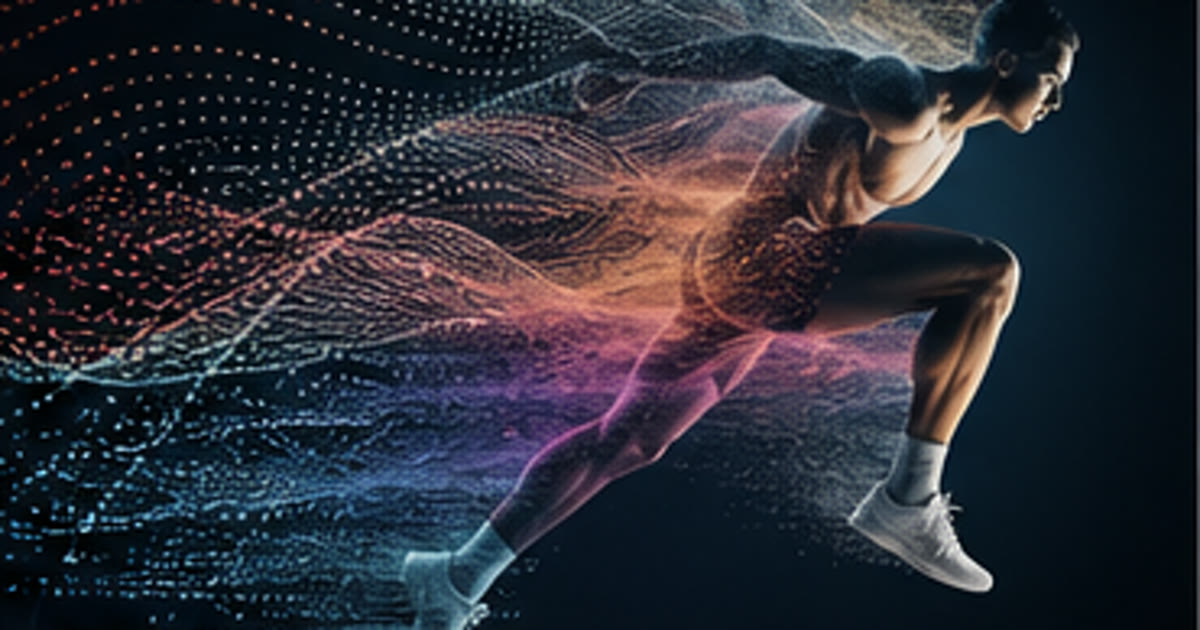
Three domains that used to sit apart
There is a pattern you notice if you spend long enough working across different fields. The people building software start talking about performance. The people training for performance start talking about data and systems. The people working creatively start reaching for tools that used to belong only to engineers and analysts. The lines between these worlds, technology, performance, creativity, have been thinning for years, but in 2016 something about the speed of that thinning became hard to ignore.
This is the observation that has been sitting underneath a lot of the work here. And at the end of this year, it feels worth setting down clearly.
What performance started to look like this year
Elite performance has always depended on feedback: a coach watching from the side of the track, a trainer reviewing footage, a musician listening back to a recording and making adjustments. What changed in 2016 is the granularity, immediacy and accessibility of that feedback.
Wearables, biometric logging, HRV tracking, sleep monitoring: these are no longer niche tools for professional athletes. They are consumer products. The effect is that performance culture, the kind of deliberate, data-informed approach to physical and cognitive output that used to live inside professional sport, has started to infiltrate how ordinary people think about their own capacity.
This matters not just as a market observation. It matters because it signals that the gap between aspiration and methodology is closing. People are increasingly willing to engage with their own performance as something measurable, adjustable and buildable over time. That is a meaningful shift in how people relate to their own capability.
The question is whether the tools actually help. Having data is not the same as understanding it. Having a metric is not the same as having a standard. A great deal of what passes for performance optimisation at the consumer level in 2016 is still very noisy. The data is there but the interpretation layer is weak, and without that layer the information becomes clutter rather than signal.
That gap between data and insight is something that keeps coming back in the work here. It is not a trivial problem to solve.
What creativity started to look like this year
Creative practice is undergoing a parallel transformation. The tools available to creators, musicians, designers, writers, filmmakers, game makers, are no longer simply execution tools. They are increasingly intelligent about what the creator is trying to do.
The most visible version of this is in generative and algorithmic tools. Models that can assist with melody, rhythm, colour relationships, layout logic, copy generation. None of this replaces creative judgement, but it changes what a single person with creative intent can produce. The leverage available to an individual with a clear idea and a competent set of digital tools has expanded considerably over the last few years, and 2016 is a year in which that expansion becomes visible across multiple domains simultaneously.
What is interesting is not the automation argument, the familiar worry that tools will replace the people using them. That framing misses the more important dynamic, which is that tools have always shaped creative output, and the shape of the tools available now produces a different kind of creative possibility. A musician with access to intelligent synthesis and pattern recognition can explore structural territory that would have taken months to reach by hand. That is not automation. That is extension.
But extension is only valuable if the person doing the extending has something worth extending. The underlying creative judgement, the ear, the aesthetic sensibility, the standard: these still belong to the human and are not substitutable. What changes is the distance between idea and realisation. That distance is shrinking.
Why these two things are meeting in the same place
Performance is about reducing the gap between what you are capable of and what you are currently doing. Creativity is about narrowing the gap between what you can imagine and what you can make. These two processes have a common structure. Both are fundamentally about extending capability: human capability, applied in different directions.
Technology, in both cases, is most useful when it does three things well: it surfaces information the person could not easily see themselves, it removes friction from execution, and it helps hold the standard the person is trying to meet without that standard slipping in the day-to-day noise of actually doing the work.
Where technology fails in both domains is when it substitutes for the human making the judgement rather than assisting it. A fitness platform that tells a person what to eat, when to sleep and how to train without any engagement with that person's actual goals or history produces dependency rather than capability. A creative tool that generates output without requiring the person to develop taste or judgement produces content, not creative development. The tool is useful; the uncritical reliance on it is not.
This distinction, between tools that extend capability and tools that substitute for it, is the design question that matters most in both spaces. It is not obvious, and it is not solved by good intentions at the product level. It requires getting the product logic right at a structural level.
What this means for how the group is organised
Mustard Seed Group holds work across these three domains. The fitness and consumer platform work in All Purpose and CheekyGains sits in the performance space. The software and systems work in Orbit and TUXX sits in the technology space. The creative and cultural dimensions of the work sit across several of these. From the outside, this can look like a collection of unrelated bets. From the inside, it has always felt more coherent than that.
The reason is this: if the thesis is that these domains are converging, then a portfolio that spans them is not diversification for its own sake. It is an attempt to position the group at the point of convergence: to build things and learn things in each domain that become relevant in the others.
The performance work teaches things about how people actually engage with standards, feedback and accountability over time. That is directly useful in designing software products that need to keep people engaged with their own goals over months, not just days. The technology work surfaces structural patterns, what works in data representation, in tool design, in making complexity manageable, that transfer to how you think about training systems and creative workflows. The creative work keeps the product sensibility honest, because creative domains have high standards for how things feel to use and are unforgiving of tools that do not work with the person.
None of this is automatic. The knowledge has to be extracted and applied deliberately. But the structure is there.
The insight that keeps returning
The year ends with a clearer version of something that has been building in the background: you cannot serve any one of these domains fully without understanding the others. A fitness platform that does not think carefully about tool design, data interpretation and the creative dimensions of motivation will plateau at a certain level of usefulness. A software operating system that is not informed by how high-performance people and organisations actually work will fill itself with features that do not correspond to real behaviour. A creative tool that does not have a clear performance model, some account of what getting better looks like and how the tool serves that, will help people produce output but not develop.
The group's multi-domain structure is not a compromise or an accident of what seemed like interesting work in different years. It is the result of noticing this dependency and deciding to take it seriously at an institutional level rather than hoping it would take care of itself.
A note on where this goes
Going into 2017, the thesis is not changing. What is sharpening is the understanding of how each piece of the portfolio contributes to it. The research and systems work feeds into how intelligent the products can become. The consumer platforms test how that intelligence translates into real changes in what people can do. The services and client work accelerates learning from live environments.
The convergence of technology, performance and creativity is not a trend to capitalise on. It is the territory where the most interesting and the most useful work is happening. The aim is to be in that territory: building things that hold together over time rather than things that are relevant for a moment.
That is a long-term position. It requires patience and it requires holding the centre clearly enough that individual product decisions stay oriented to something larger. The centre is capability: expanding what people and organisations can actually do. Every product in the portfolio, at its best, serves that.
The thesis, at the end of this year, is clearer than it has been. The work ahead is to execute it.