Culture
Creative culture and identity
Identity as part of product work
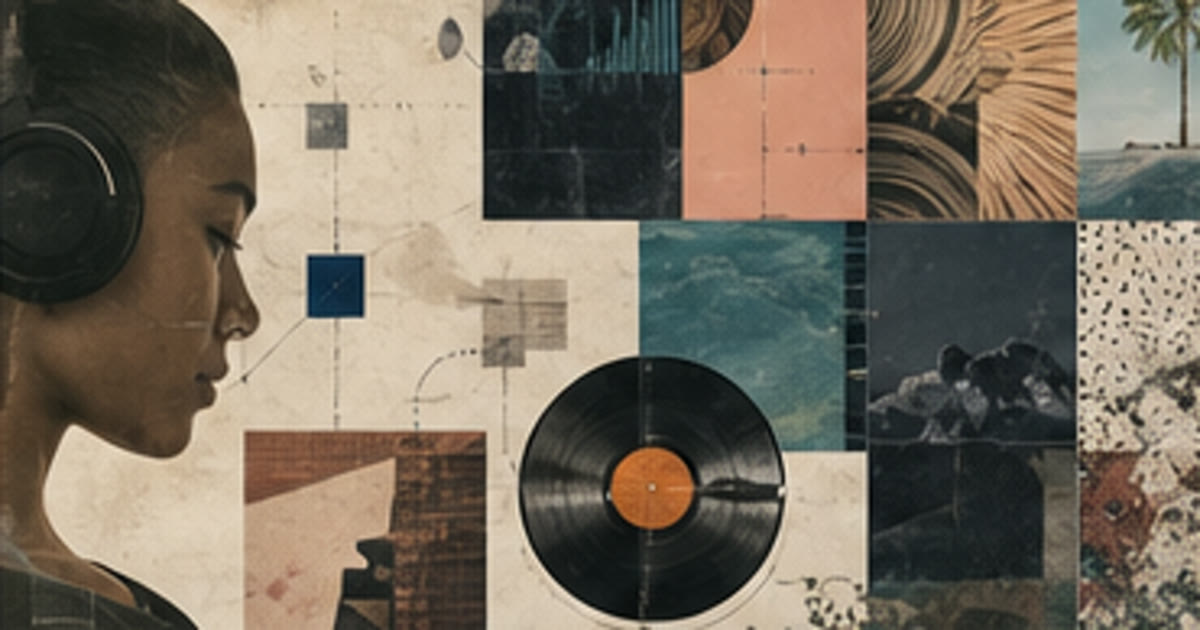
The self you choose in creative spaces
There is a moment, usually quiet and private, when someone decides they are a musician. Not when they release their first track, not when someone pays them for a gig, not when a review appears somewhere online. The decision comes earlier, usually in a bedroom, usually alone, when they hear something that makes them think: I want to make that. And then, more importantly: I am someone who makes that.
That shift in language matters more than it might seem. Moving from "I want to" to "I am" is an identity claim, and identity claims change behaviour. Once someone considers themselves a musician, they start noticing other musicians differently. They pay attention to kit, to process, to craft. They seek out communities where that self-conception is legible to others. They make different decisions about how to spend evenings, money, mental energy. The identity is not the output. The output follows from the identity.
This is not unique to music. It happens across every creative domain. Athletes who describe themselves as athletes, rather than people who sometimes train, show up to difficult sessions differently. Filmmakers who have internalised that label will watch films analytically even when they are trying to relax. The identity seeps into perception, prioritisation and practice.
For anyone building products that sit inside creative cultures, understanding this dynamic is not optional. It is foundational.
What it means to belong to a creative culture
Belonging is not the same as participation. You can attend concerts without belonging to a music culture. You can follow fitness accounts without belonging to an athletic community. Belonging requires something more reciprocal: the sense that the culture sees you and that you, in turn, feel responsible to it in some way.
The markers of genuine belonging shift across contexts. In some creative cultures it is knowing the history, the lineage of influence, who came before and what they stood for. In others it is the work itself, the willingness to show your practice to people whose opinion matters to you. In physical cultures like sport or dance, belonging often comes through the body: what you can do, how you carry yourself, what your training history has written into your movement.
What these markers share is that they are not passive. You cannot belong simply by consuming a culture's outputs. Belonging asks something of you. It asks for genuine engagement, for some form of contribution, even if that contribution is as small as being a thoughtful and attentive member of an audience.
This is why creative communities can feel so different from general social spaces. The expectations are clearer. There is usually a shared language, a shared set of references, and an implicit understanding of what constitutes effort and seriousness. That shared seriousness is part of what makes the belonging feel meaningful.
The gap between consumption and formation
Most consumer products in creative spaces are built around consumption. Stream the music. Watch the content. Browse the feed. There is nothing wrong with this. Consumption is how people first encounter creative cultures, and it is how most people interact with them most of the time.
But consumption and identity formation are different things, and products that conflate them will always feel slightly hollow to the people who want more than passive entertainment. When someone puts on a playlist, they are consuming music. When they practise an instrument or learn production or develop their taste through deliberate listening, something different is happening. They are building a self.
The distinction matters because it changes what a useful product looks like. A product optimised for consumption maximises time spent, variety accessed, convenience delivered. A product that supports identity formation is asking different questions: does this help someone understand something about their craft? Does it connect them to others who share their seriousness? Does it give them a way to practise, to fail, to improve, to see themselves developing?
This is harder to build. It does not optimise cleanly for the metrics that dominate most product thinking. But it is what people who have genuinely committed to a creative identity actually need, and it is what earns the kind of loyalty that does not dissolve when a competitor lowers their price.
How identity shapes creative behaviour in practice
It is worth being specific about the mechanisms here, because vague claims about identity tend to stay vague and therefore useless.
When someone has a strong creative identity, they exhibit a set of predictable behaviours. They seek out peers. They are drawn to spaces, digital or physical, where their specific creative interest is taken seriously. They invest time in learning craft, not just consuming work. They develop opinions, and they share those opinions because having a perspective is part of what the identity means. They tolerate discomfort in the service of improvement because the identity gives that discomfort a purpose.
They also become selective consumers. A strong creative identity does not make someone consume more broadly. It often makes them consume more narrowly and more intentionally. The musician who is serious about production starts filtering their listening through production questions. The athlete committed to performance starts reading differently, watching differently, measuring differently. The identity creates a kind of purposeful attention that reshapes everything else.
This has direct implications for product design. Products that serve people with strong creative identities need to respect that selectivity. They should not try to be everything. They should be genuinely good at the specific things that matter to someone taking their creative self seriously.
Where consumer products go wrong
The most common failure mode is what might be called manufactured aspiration. A product presents an aesthetic of a creative lifestyle without doing anything to help the user actually inhabit that life. The interface looks like the culture. The copy speaks the language of the culture. But the product itself does not make the user more capable, more connected or more themselves in any meaningful way.
People who are new to a creative culture are susceptible to this, at least initially. But people who have genuinely committed to a creative identity develop a strong sensitivity to it. They can feel the difference between a product that serves them and a product that is performing back to them something they already know about themselves. The latter produces a kind of mild embarrassment, the way you feel when someone tries too hard to seem like one of your people.
The other common failure is optimising for the wrong phase. Many products are very good at the discovery phase, when someone is first encountering a creative culture, and much less useful once someone has moved from curiosity to genuine commitment. The features that attract a casual listener are not the features that serve a developing producer. Products that do not grow with the user's identity inevitably get set aside once the user grows past them.
What All Purpose is trying to do differently
All Purpose exists inside several creative cultures simultaneously: music, performance, storytelling, sport. The sub-products that sit inside it are each connected to specific creative identities that real people carry seriously.
The design intention is not to create a place where people consume these cultures passively. It is to build something that helps people inhabit their creative identities more fully. That is a different design brief, and it produces different choices at almost every level.
It means thinking about who the user is becoming, not just what they want to do right now. It means building for the person who has already decided they are serious, not only for the person who is still deciding. It means creating the conditions in which people can practise, develop taste, find peers and express a point of view, rather than simply accumulating time spent inside an app.
It also means being honest about what a product cannot do. A product cannot give someone an identity. Identities are built through genuine experience, effort and community. What a well-designed product can do is reduce the friction that stands between someone and the experiences that actually form them. It can make the serious work more accessible, the right community more findable, the practice more sustainable.
That is the goal. Not to manufacture creative identity, but to get out of the way of the people who are already forming one.
Why this matters now
Creative cultures are not a niche concern. The capacity to make things, to develop and express a creative self, is becoming more widely valued precisely as more repetitive cognitive work becomes automated. The people who will navigate the next decade well are, in significant part, those who have developed genuine creative identities: people who can generate ideas, develop taste, iterate on work and contribute something distinctive to the communities they are part of.
Products that support this are not lifestyle accessories. They are, in a quieter way than the phrase usually implies, genuinely useful infrastructure. Building them well is worth the care.