Culture
CLIP, DALL-E and creative search
Multimodal models point towards tools that connect language, images, taste and creative direction.
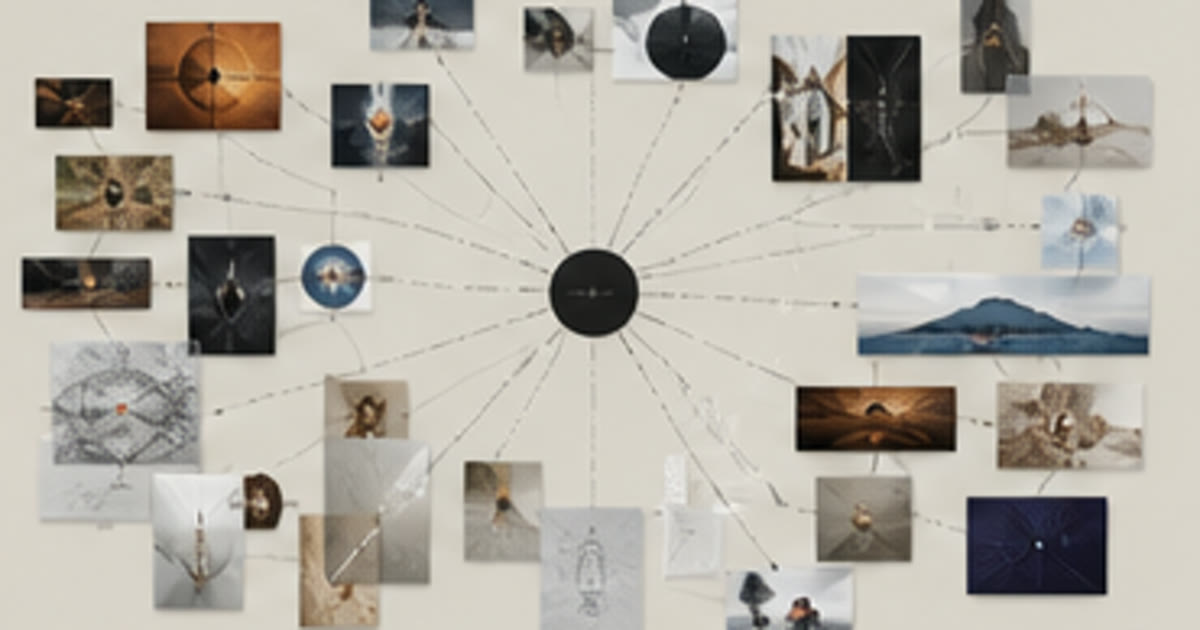
What CLIP and DALL-E actually demonstrated
In January 2021, OpenAI published two papers that changed how a small but attentive group of researchers and builders thought about the relationship between language and images. CLIP, which stands for Contrastive Language-Image Pre-training, was the quieter of the two. It did not generate anything. It learned to compare. Given an image and a caption, it learned which captions matched which images well enough that it could generalise that understanding across an enormous range of visual concepts it had never been explicitly taught. You could give it a photograph and a set of text descriptions, and it could rank them. You could give it a search query written in plain language and find photographs that matched the intent behind the words, not just the keywords.
That is not a trivial capability. The way images had been searched and categorised before CLIP relied heavily on metadata, file names, tags applied by humans, or pixel-level similarity. CLIP suggested a different architecture: one in which visual content and language could occupy shared representational space, so that the meaning of an image and the meaning of a sentence could be compared directly.
DALL-E was the louder announcement. It generated images from text prompts. You described something, and it produced a plausible visual interpretation. The outputs were strange, sometimes hallucinatory, and clearly the product of statistical pattern matching rather than intentional design. But the basic capability was real: a model trained on enough paired text and image data had developed a sufficiently coherent internal model of what visual descriptions referred to that it could create images that matched those descriptions.
Taken together, these two systems pointed towards something that had not existed before. Language and images were no longer entirely separate surfaces. They could be connected, traversed, and searched in ways that operated closer to how creative thinking actually works, which rarely involves tagging files or composing pixel grids, and much more often involves trying to express and refine an impression.
What changes when production gets faster
The standard framing of any new productivity tool is that it speeds things up. The assumption is that faster production is unambiguously better: more content, lower cost, shorter cycle times. And at a mechanical level, AI-assisted image generation does reduce the time between having an idea and having a visual approximation of it. That reduction is real and it compounds.
A visual concept that previously required a designer, reference gathering, iteration and several rounds of feedback can now be roughly approximated in seconds. A moodboard that took hours of image sourcing can be populated in minutes. A film or music production team trying to establish a visual direction before a shoot can explore dozens of variations before committing to one. The iteration cycle shortens dramatically.
But there is a subtler consequence that is worth examining. When production is slow, creative decisions carry more weight because they are harder to reverse. A slower production process forces a kind of commitment that can actually be useful. It pushes you to think harder before you begin, to be more deliberate about what you are trying to make and why. When production gets faster, you can afford to be wrong more often, which sounds like an improvement but also changes what it means to have a creative direction in the first place.
If any visual can be generated quickly, the filtering and decision problem does not disappear. It shifts. The creative work is no longer primarily the act of production. It becomes the act of judgement: knowing what to keep, what to discard, what to pursue further and what to abandon. That is a different skill set. It is not necessarily harder or easier, but it is different. Tools that make production faster create pressure to develop better taste and clearer editorial instincts, because those become the constraint.
Voice, originality and the AI-assisted question
There is a persistent anxiety in creative communities about what AI-assisted work means for originality. The concern usually takes one of two forms. The first is economic: if AI can produce competent images, does that devalue the work of people who make images? The second is ontological: if an image was generated by a model rather than drawn by a hand, is it genuinely creative?
Both concerns are worth taking seriously, but neither is fully answered by the technology itself. They are answered by the choices made in how the technology is used and how it is positioned in the production process.
The economic question is real and ongoing. The cost of generating a plausible image has collapsed. That will have consequences for some markets and some practitioners. But the history of creative tools suggests that cost reduction in one part of a creative process tends to shift value towards the parts that remain expensive: genuine taste, original thinking, the ability to make work that could only have come from a particular perspective or context. Photography did not eliminate painting. Desktop publishing did not eliminate graphic design. What changed was the distribution of who could do what, and where the high-value creative work lived.
The ontological question is more interesting and probably more persistent. What makes creative work meaningful? The answer has never been entirely about the effort of production. It has always been more about intention, selection, and context. A photograph involves no mark-making in the traditional sense. A sample-based music track uses audio that someone else originally recorded. A collage is assembled from found material. The question of what counts as original work is not new, and the presence of AI generation does not settle it in any final way. What it does is raise the stakes of the editorial decisions that surround generation. If anyone can generate, then the creative act becomes the judgement about what gets made, how, and why.
For tools built to support creative culture, this distinction matters. The interesting design problem is not how to generate more. It is how to help people articulate, refine and act on what they actually mean.
Design implications for tools that support creative culture
CLIP's most immediate practical application is not image generation. It is search and reference gathering. If you can search images by describing what you want rather than by tagging, you lower the friction between a creative instinct and access to relevant material. A musician looking for visual references for a campaign, a producer trying to articulate a set direction to a collaborator, a brand trying to communicate an aesthetic to a freelancer: all of these use cases involve the problem of translating an internal impression into something that can be shared and worked with externally. CLIP-style models can sit inside that translation process.
For a consumer ecosystem like All Purpose, which is built around performance, identity, music and personal development, the design implication is that a person's own content, memories, goals and aesthetic preferences could become more searchable and more useful. Not because the software makes creative decisions for them, but because it can help them surface what they already have and what they are already reaching towards. The leverage is in the assistance, not the automation.
DALL-E's design implications are different. The generative capability is most useful where the goal is rapid iteration and rough approximation rather than final output. It is a tool for the early stages of a creative process, when the most valuable thing is being able to see something quickly enough to have a reaction to it and keep moving. The mistake would be to treat it as a replacement for considered creative work. The better use is as a first-pass mechanism that accelerates the path from concept to something concrete enough to evaluate.
The tools that will matter in the long run are not the ones that generate the most or fastest. They are the ones that help people develop, articulate and pursue a genuine creative direction. The generation is cheap. The direction is expensive. Building tools that support the expensive part is where the design problem actually lives.
A working note on what this period represents
August 2021 is not the moment AI creative tools became mainstream. They are still largely in the hands of researchers, early adopters and technically fluent practitioners. The outputs are often uncanny, the interfaces are rough and the integration into professional production workflows is limited.
But the underlying capability is established. The question has shifted from whether AI can assist meaningfully in creative work to how that assistance should be shaped, when it should be invoked and what it should leave to the person doing the creating. Those are design questions, not research questions.
The history of creative tools is a history of leverage. The printing press, the camera, the digital audio workstation, the internet: each one changed what it was possible to make, who could make it and at what cost. The tools always create new pressures alongside new possibilities. They change the economics, they change the aesthetics, and they change what creative work actually demands of the people doing it.
CLIP and DALL-E are early evidence of a new kind of leverage. The creative tooling that will be built on top of these capabilities is still being worked out. The design decisions made now, about what to automate and what to preserve, about what to generate and what to ask a person to choose, will shape the creative culture that emerges from this period. That is worth paying close attention to.