Founder letter
Services, products and research separate
Year-end separation of services, products and research
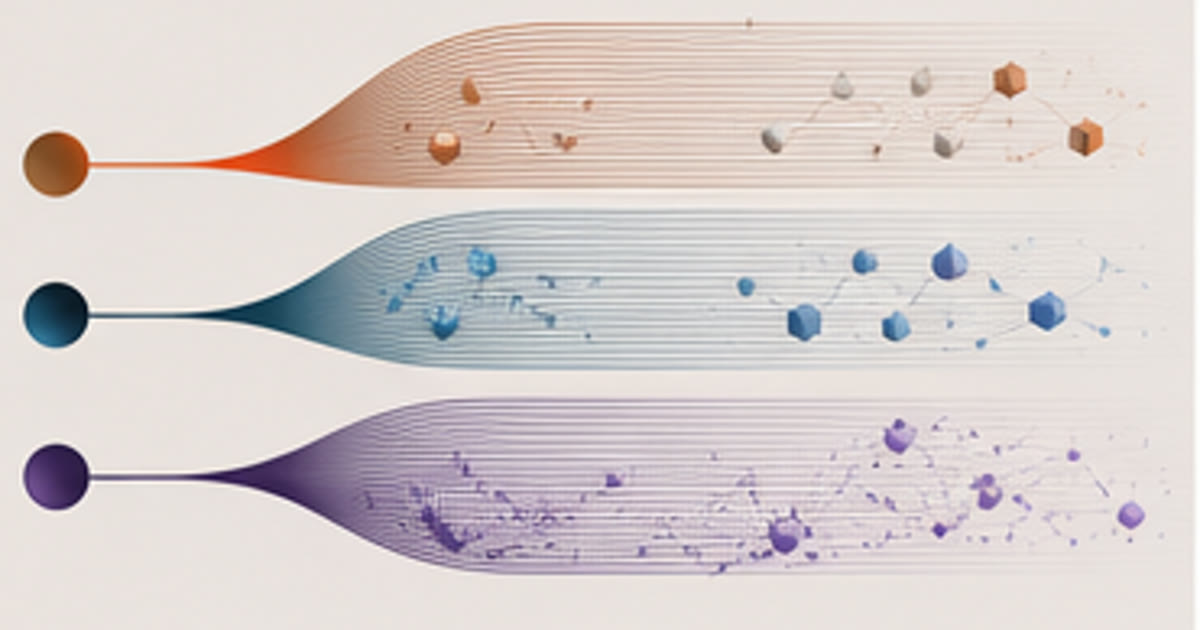
Three things that do not belong in the same sentence
At some point during the year, not a single moment, more like a slow clearing, it became obvious that services, products and research are not the same kind of work. They share a thesis. They inform one another. But they operate on different clocks, answer to different criteria, and produce different kinds of output. Treating them as one continuous activity had created friction that was mostly invisible until it wasn't.
Year-end is a useful forcing function. When you sit down to describe what happened across twelve months, the categories either hold up or they don't. This year they finally held up, but not because we planned the separation cleanly in advance, but because the work itself pulled in distinct directions and we had the sense to stop resisting it.
TUXX does services. Orbit and Orion are product. Benediction Lab is research. That sentence took longer to earn than it looks.
What services are actually for
TUXX exists to build custom AI systems and software for clients, but that description undersells the purpose. The real function is pattern validation. Every engagement runs against live business conditions: real budgets, real timelines, real expectations from real people who are not particularly patient with technical abstractions. That pressure is the point.
A research hypothesis that looks elegant in isolation gets tested differently when a client needs something working by the end of next month. A product assumption that seems obvious from inside the studio turns strange when an external organisation tries to integrate it into their actual operations. Services work surfaces this kind of friction quickly, and quickly is the operative word. There is no simulation that replicates the specific weight of a client relationship with actual stakes on both sides.
Pattern Up, the TUXX sub-product that began taking shape through the year, sits at the intersection of what keeps proving useful across engagements. It is not the output of a single client relationship. It is the distillation of what keeps working, accumulated across different contexts and different kinds of briefs. That kind of accumulation is only possible if the services track is producing real signal rather than just billing hours, and it only produces real signal if the engagements are chosen with intention rather than out of availability.
The commercial rhythm of services is also different from anything else in the portfolio. Revenue is episodic, scoped, tied to specific deliverables. Success is measurable in the near term. That is genuinely useful: not every part of the portfolio needs to operate on a three-year horizon, and having something that generates real-world feedback quickly keeps the centre of gravity grounded. It is easy to lose track of whether your assumptions about value are real when everything you are building is long-cycle. Services breaks that abstraction regularly and on a schedule the client sets, which is exactly what a portfolio building at the frontier needs.
Product as a different kind of patience
Orbit is a B2B SaaS operating system. It covers the full lead-to-launched-product commercial workflow. The ambition is not to be another CRM: it is to be the operating surface where commercial execution actually happens, from the first contact to a live product in market. That scope requires a different relationship with time than services work allows.
Building Orbit well means resisting the temptation to bolt on whatever proved useful in the last TUXX engagement. The lessons from services work are valuable inputs, but inputs are not the same as direction. Orbit has its own logic, its own user's needs, its own architecture constraints. When those get subordinated to the latest client pattern, the product loses coherence. When they are protected, the product gets better. This is one of the subtler forms of discipline that a portfolio structure requires: knowing which direction the information flows, and at what stage.
Product is patience of a particular quality: not passive waiting, but the sustained refusal to optimise for the short term at the expense of the architecture. A feature that solves a client problem today but introduces the wrong abstraction into the core data model is not actually a good decision. A workflow pattern that clients ask for repeatedly is only worth building into the product once you understand why they keep asking for it, not just that they do. Orbit is being built with that discipline active, which is slower by some measures and considerably more durable by others.
Orion is the AI intelligence layer that powers Orbit commercially, handling memory, reasoning, context and the orchestration of capability within the operating system. As an internal research project as much as a product component, Orion sits at the boundary between research and product, which is the natural place for something that is simultaneously furthering understanding and being put to use. That dual nature requires clarity about which mode is active at any given moment. Research mode asks whether something is true or possible. Product mode asks whether something is ready and reliable. Conflating the two modes is how you end up with neither: capabilities that are architecturally sound but not stable enough for users, or stable features that were frozen too early and missed what was possible.
Research without a delivery deadline
Benediction Lab is the hardest to explain to someone operating with a delivery-deadline frame of reference, because it does not have one in the conventional sense. The lab focuses on agents, memory systems, GUI control and autonomous product development: areas where the field is moving fast enough that the primary requirement is to stay close to what is actually becoming possible, rather than shipping something based on what was possible six months ago.
The rhythm of research is not slower than product or services. It is differently paced. There are periods of intense exploration followed by consolidation, re-reading, reconsidering. The output is not a feature or a deliverable: it is understanding that eventually becomes capability. That understanding feeds back into Orion, into the product architecture of Orbit, into the way TUXX approaches a novel brief. But that feedback is only valuable if the research was allowed to follow its own questions rather than being bent toward the nearest useful application.
One of the clearer insights from 2021 is that premature application is one of the main ways research destroys its own value. A concept that needs another three months to mature does not become more useful by being forced into a product before it is ready: it becomes a constraint. You end up managing the debt of the early decision rather than building on a solid foundation. Benediction Lab having its own space, its own timeline and its own measures of progress means the work has a better chance of being genuinely useful rather than prematurely useful.
There is also something worth naming about intellectual standards. Research done under product pressure tends to answer the question the product is already trying to answer. Research done in its own space can question whether that is the right question. That second-order capacity, to interrogate the frame rather than just optimise within it, is precisely what makes a research function valuable over a long horizon and precisely what gets lost when the function is subordinated to nearer-term goals.
The portfolio as an architecture
Viewed together, the three tracks form something more coherent than the sum of their parts. Services produces signal at commercial speed. Product turns the most reliable of those signals into durable capability, protected by its own internal logic. Research stays ahead of what the product will need next, working at a pace the field demands rather than a pace the calendar demands.
The risk in a portfolio like this is not that the tracks are too different: it is that the centre tries to manage them as though they were the same. Services measured like research gets impatient. Research managed like a product sprint loses depth. Product developed like a services engagement loses architecture. The separation protects each track from being evaluated by criteria that do not belong to it. The failure mode to avoid is not inefficiency at the edges; it is misapplied accountability at the centre.
Mustard Seed Group as a holding institution exists to maintain the thesis that connects all three without flattening any of them. The thesis, that intelligence, well applied, increases human capability, is genuinely shared across the portfolio. But the way Benediction Lab pursues that thesis looks almost nothing like the way TUXX pursues it, and that is by design. The connective tissue is conceptual, not operational. The institution holds the idea; the tracks do the work.
What year-end actually clarifies
December is useful not because it marks an ending but because it creates the occasion to name what is already true. The separation of services, products and research was not decided this month. It was recognised. The work had already been pulling in those directions; the clarity was in finally describing it accurately.
Going into 2022, the structure is cleaner than it has ever been. TUXX knows what it is optimising for. Orbit knows what it is building and why it must be protected from being bent into a consulting deliverable. Benediction Lab has the room it needs to do work that is genuinely exploratory rather than perpetually pre-commercial.
That is not a small thing. Most organisations that try to run services, product and research under the same roof end up with each track subtly distorted by the logic of the others. The services arm gets conservative because the product team needs stability. The product team ships before ready because the services arm is generating expectations. The research function gets instrumentalised because both of the others want something to point at. Avoiding that pattern requires structural clarity, not just goodwill, and the structural clarity is now in place.
The portfolio is an architecture. Each piece earns its place by doing its particular kind of work well. The goal is not integration for its own sake: it is that each track, excellent in its own mode, makes the others better by existing alongside them.
That is a good place to end a year on.