Performance
Human performance as software category
Performance becoming a software category
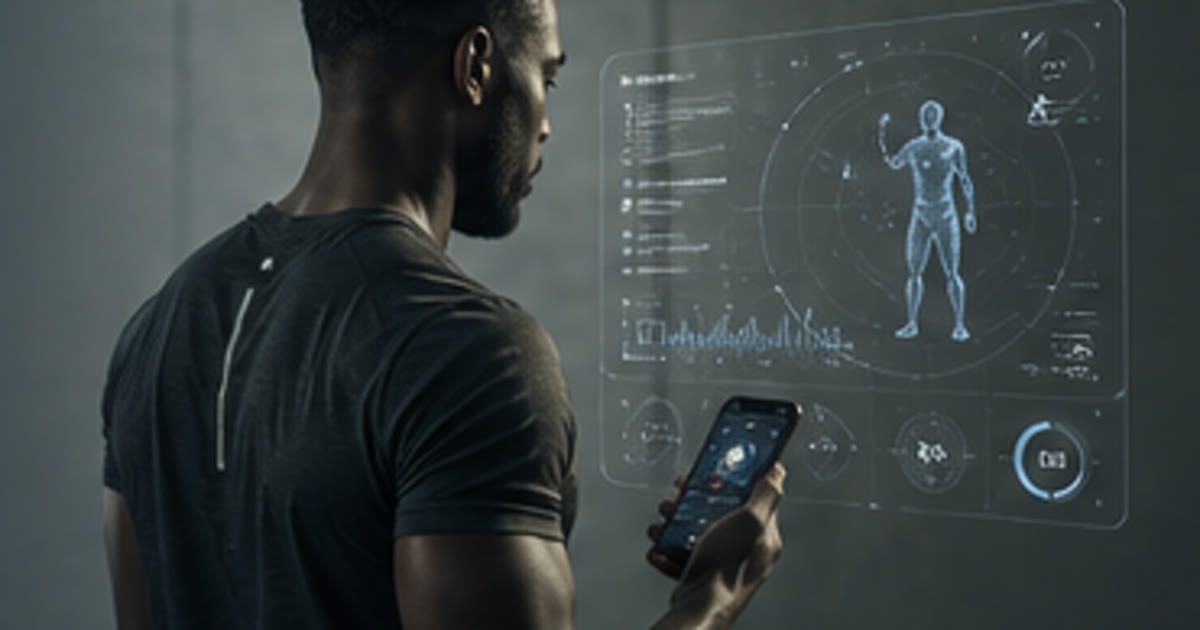
There is a person who trains seriously, competes in something, a sport, a discipline, a physical standard they have set for themselves, and holds themselves to a level of consistency that most people would find uncomfortable. They are not trying to lose weight. They are not trying to "get healthy." They are performing, and they have specific needs: a record of what they did and under what conditions, honest feedback on where they are relative to where they should be, and some form of accountability that does not dissolve the moment motivation is low.
Existing software does not serve this person well. It serves someone adjacent to them.
The category confusion
Fitness apps are built around entry. They make it easy to log a run, track a macro, hit a streak. The interface assumes the user needs encouragement, gamification, a badge for showing up. The deeper assumption, rarely examined, is that engagement is the problem, and that engagement is solved by friction reduction and reward loops.
For the person described above, that assumption is wrong. They are already engaged. The question is not whether they will show up. The question is whether the record they are building, the feedback they are receiving, and the standard they are held to is worth anything. Encouragement they have not earned is noise. Streaks that ignore quality are dishonest. Badges have no meaning to someone who already has a rigorous internal standard.
Habit apps are a different category entirely. They are built around repetition installation: the idea that behaviour becomes automatic through consistent cues, routines and rewards. This is useful, and the research behind it is real, but it describes a very specific phase of development: early habit formation. It is not a description of ongoing performance, where the habits are already set and the challenge is execution quality, adaptation and recovery from setbacks without loss of identity.
Productivity tools, the third category that sometimes bleeds into this conversation, are almost entirely irrelevant to the performance user. They are built to manage information, tasks and time. They assume the output is cognitive. The performance user's primary output is physical, and the relationship between input (training, nutrition, sleep, stress) and output (capacity, output, readiness) is non-linear, lagged and deeply contextual.
None of these categories are wrong. They serve real users with real needs. The problem is that they have colonised the space where a distinct category should exist.
What the performance user actually needs
The performance domain has its own requirements, and they are specific enough to constitute a genuine category.
**Standards, not targets.** A target is a number you aim for. A standard is a level below which performance is not acceptable. The distinction matters because targets are negotiable, they can be revised downward when things get hard, while standards are not. Software that only knows about targets will always accommodate the user's desire to lower the bar. A performance product needs to hold the standard even when the user is rationalising.
**Accountability with memory.** Accountability has almost no value if it is stateless. A single week of poor performance looks like noise. Three consecutive weeks looks like a pattern. Six weeks looks like a structural problem. The value of accountability is cumulative, and it requires a system that can hold a history long enough to distinguish signal from fluctuation. Most fitness apps have logs, but logs are not accountability. Accountability requires something that reads the log, forms a view and reflects it back.
**Coaching that adapts.** Human coaching adapts continuously. A good coach does not prescribe the same intervention in week one as in week twenty, because the athlete has changed. They know what the athlete responds to, what their patterns of avoidance look like, how they behave under fatigue versus stress versus genuine illness. Software coaching, for the most part, does not do this. It applies the same generic logic to everyone, adjusted only by the raw numbers in the log. The adaptation is quantitative rather than qualitative.
**Context as a first-class input.** Performance is contextual in ways that are difficult to quantify. Whether a session was good depends on what the athlete was carrying that day: sleep quality, stress load, nutrition state, emotional weather. A number without context is hard to interpret. A pattern of numbers without context is easy to misread. The performance user needs a product that can receive context, hold it and use it to make sense of what the data actually means.
These four requirements are coherent and specific. They describe a product with a different architecture, a different relationship with the user and a different theory of what the product is trying to do.
Performance is an interface problem
The mistake that most fitness products make is treating performance as a motivation problem. The interface is designed to motivate: bright colours, celebration states, progress bars, social proof. This is appropriate for users who need motivation. The performance user does not need motivation. Or rather, their motivation is not the system's to manage. What they need is clarity.
Clarity about where they are relative to the standard. Clarity about what the recent pattern suggests. Clarity about whether the adaptation is working or whether something needs to change. The interface for this is quieter, more precise, and sometimes more uncomfortable. It does not celebrate attendance. It surfaces pattern.
A good performance product helps someone notice the pattern, make the better choice easier and return to the standard after a miss. The return after a miss is where most systems fail. They either ignore the miss (positive-only feedback) or they nag about it (which creates friction without insight). Neither is coaching. Coaching after a miss means acknowledging it clearly, understanding what happened, and making a plan that accounts for the real situation, not the ideal one.
What changes when AI is in the loop
Language and memory models change this conversation in a specific way. They make it possible to have a coaching relationship at scale that is genuinely conversational, contextual and continuous.
The bottleneck in human coaching has always been time. A coach's time is finite. The sessions where genuine coaching happens, where pattern recognition occurs, where honest feedback is delivered, where the athlete works through what is really going on, are limited to whatever the coach's schedule allows. Between those sessions, the athlete is largely on their own.
A language model with persistent memory can be present in the moments between. It can receive a quick log at the end of a session, hold it alongside everything that came before, and respond in a way that is informed by the full picture rather than just the most recent data point. It can ask the right question at the right moment, not as a scheduled notification, but as a response to what the athlete has just said.
The limit is quality. A conversational coaching system is only as good as the context it holds, the standards it knows about and the judgement it applies. Generic AI responses are easy to generate and mostly useless for the performance user. What matters is whether the system knows this person's standard, this person's patterns and this person's tendencies, and whether it can use that knowledge to say something true.
That is the thesis behind Naira inside CheekyGains: not replacing the effort, not generating enthusiasm, but being present at the moment when the decision is still live. The decision to train when energy is low. The decision to eat well when it is inconvenient. The decision to log accurately when the session was poor. Those are the decisions that determine whether someone performs or merely maintains the appearance of performance, and they happen outside of scheduled coaching sessions.
The CheekyGains category thesis
CheekyGains exists inside the All Purpose consumer ecosystem because the consumer layer is where most people first engage with performance. The shift from "I want to be fitter" to "I hold myself to a standard" is a meaningful transition, and it can happen gradually, supported by the right environment.
The category thesis is simple: human performance is distinct from fitness, distinct from habit formation, and distinct from productivity. It has its own requirements, standards, memory-backed accountability, adaptive coaching, and contextual feedback, and those requirements are coherent enough to justify a purpose-built product.
The existing categories will not grow to fill this gap. Fitness apps optimise for engagement and retention metrics that are in tension with honest performance feedback. Habit apps are anchored to a different theory of behaviour change. Productivity tools are not built for the body. The gap is real, the users are real, and the product requirements are specific enough to build against.
The question is not whether the category exists. The question is whether a product can be built to serve it at the quality level the performance user actually deserves.
That standard is high. It should be.