Culture
Creative culture and All Purpose thinking
Consumer culture as a portfolio surface
The thesis behind the name
All Purpose is not a brand in the conventional sense. It is not a product category looking for a name. It is, more precisely, a thesis about what consumer technology has consistently failed to do for creative people: give them a coherent place to exist that honours the full range of what they are trying to do and become.
The name carries the argument. People who create, who move between disciplines, who refuse to be flattened into a single audience category, have been poorly served by platforms that optimise for engagement above identity. All Purpose starts from the opposite position. It asks what it would look like to build infrastructure for people who treat creativity as a way of life rather than a hobby or a job function.
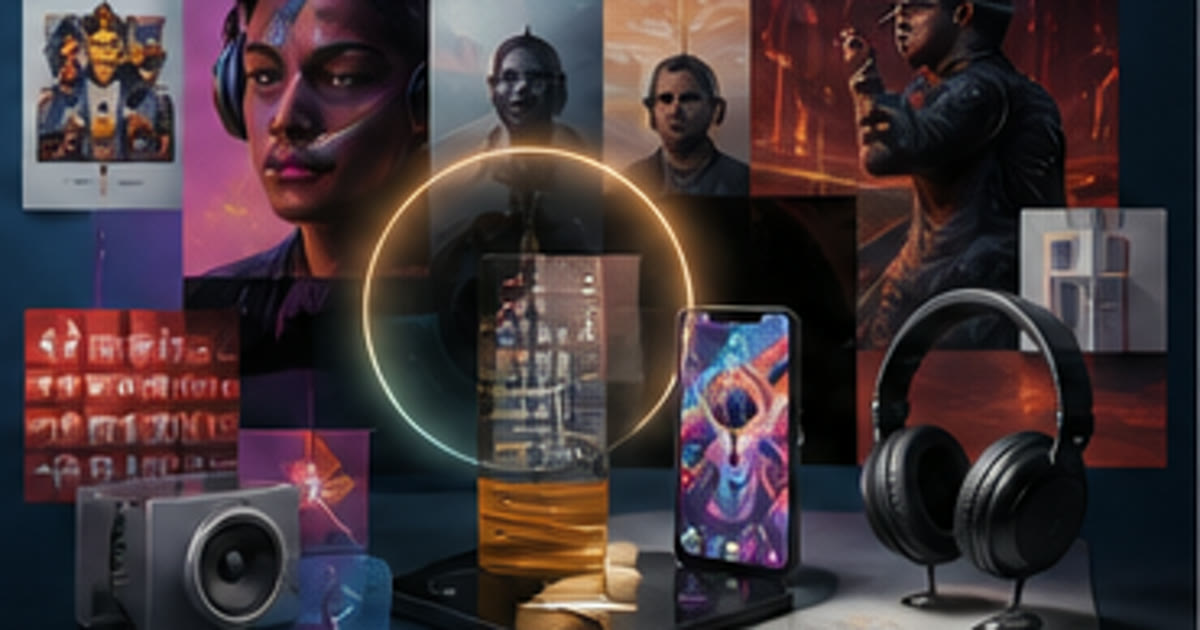
In early 2022 that thesis is becoming concrete. Four sub-directions have emerged with enough definition to be worth naming. All Purpose Music, Made It Out, Relay, and Horizon are not separate companies in waiting. They are expressions of the same underlying belief, working on different problems. Understanding how they relate to each other is more useful than describing any one of them in isolation.
What the consumer creative moment looks like right now
The early 2020s have produced a strange tension in consumer culture. On one hand, the tools to make things have never been more accessible. Distribution has been democratised to the point where someone working alone can reach an audience of meaningful size without institutional support. On the other hand, the platforms built around this explosion of creative production have made it harder, not easier, to build something coherent. Attention has been atomised. Algorithmic surfaces reward novelty and recency over depth. Identity has been compressed into formats that do not capture the full picture of who a creative person actually is.
The result is that many of the most capable people in consumer creative culture spend significant energy on maintenance tasks: managing their presence across multiple platforms, finding and re-finding their communities, working out which parts of their creative life belong where, and dealing with the cognitive load of contexts that rarely talk to each other. This is the problem space All Purpose is working inside.
The belief is that creative capability and cultural belonging reinforce each other. When someone feels genuinely located inside a creative community, they make better work. When they have infrastructure that extends their capability without fragmenting their attention, they can follow through on ideas that would otherwise stall. Neither of these things is possible if the tools are designed around extraction rather than support.
All Purpose Music: the platform direction
Music sits at the centre of All Purpose for reasons that are not primarily about the size of the music industry. Music is the domain where the gap between creative participation and meaningful infrastructure is most visible and most felt.
A producer working on their third project does not need another streaming platform. They need a way to develop their craft, find collaborators whose aesthetic sensibilities are compatible with their own, understand how their work is landing, and build genuine relationships with the people who value what they make. These are not problems that distribution solves. They are problems that require a different kind of platform logic altogether.
All Purpose Music is oriented around creative development rather than consumption. The direction is towards capability: helping people who make music become better at making music, and connecting that creative development to the broader culture around the work. What that looks like in product terms is still being shaped, but the principle is clear. The platform surface should serve the person making the thing, not only the person consuming it.
Made It Out: cultural storytelling as infrastructure
Made It Out addresses a different gap. Creative culture produces stories constantly, but most of the infrastructure built around those stories is designed for the people who already have platforms. The person in the middle of becoming, the creative who is five years in and doing work that matters but has not yet crossed the threshold of mainstream visibility, is largely invisible to existing media structures.
Made It Out is interested in that person. Not as a demographic, and not as a discovery mechanism for an eventual crossover story, but as someone whose journey is itself culturally significant. The stories of creative people who are building something real, without the support of established institutions, are some of the most instructive and valuable stories in contemporary culture. They demonstrate that creative capability can be developed, that persistence produces outcomes that cannot be predicted in advance, and that communities form around creative work in ways that conventional media rarely captures.
There is a practical dimension to this as well. Good cultural storytelling builds the kind of trust that other surfaces within All Purpose can grow from. When people feel seen and represented accurately, they are more likely to invest in the infrastructure designed to support them. Made It Out creates that trust not through performance but through genuine editorial attention to the people it covers.
Relay: community and the question of connection
Community is one of the most overused words in consumer technology and one of the most underbuilt things in consumer products. Platforms that claim to build community have typically built audiences: collections of individuals who share an interest in the same content, who do not necessarily know each other or have any mechanism for meaningful connection.
Relay takes the position that creative culture depends on real relationships. The people who develop and sustain creative capability do so inside networks of peers, collaborators, mentors, and listeners. These relationships are not formed by following someone's account or joining a group chat. They require repeated, substantive contact over time, and they require contexts where people can be honest about what they are working on and where they are struggling.
The design challenge for Relay is therefore not a features challenge. It is a context challenge. What kind of environment makes it possible for genuine connection to happen between people who share creative sensibilities? How do you create the conditions for the kinds of relationships that actually support creative development, rather than simply providing the technical mechanism for people to message each other? These are questions that require careful observation of how creative communities actually work, not assumptions imported from social media.
Relay sits within All Purpose because community is not separable from culture or capability. It is the mechanism through which creative knowledge moves, through which standards are set and refined, and through which people find the collaborators and peers that make sustained creative work possible.
Horizon: aspiration and the shape of the future
Horizon operates at the furthest edge of All Purpose's territory. Where the other sub-directions address specific needs, Horizon is oriented towards something more ambient: the experience of having a creative future worth moving towards.
Aspiration is not a soft concept. For people operating inside creative culture, the ability to see a believable path forward is foundational to the decisions they make now. Which skills to develop, which relationships to invest in, which projects to prioritise, all of these decisions are shaped by whether someone can construct a compelling picture of what the next several years of their creative life might look like. The absence of that picture is not motivational weakness. It is often the result of not having access to the right models, the right information, or the right community context.
Horizon is interested in the infrastructure of creative aspiration. That means thinking about how people encounter the stories, examples, and perspectives that shape their sense of what is possible. It means considering how lifestyle and aesthetic belong to creative identity, not as superficial additions but as expressions of the values and sensibilities that drive the work itself. The direction here is still early, but the grounding principle is consistent with the rest of All Purpose: the goal is to extend creative capability and cultural belonging, not to sell a lifestyle category.
The design challenge: coherence without collapse
Building an ecosystem is harder than building a single product. The obvious failure mode is scatter: four products that share a brand but have no coherent logic connecting them, which means users in one surface have no reason to engage with the others and the whole is worth less than the sum of its parts.
The less obvious failure mode is compression: trying to force too much into a single surface in order to feel coherent, which produces something that does none of its intended jobs well. This is the trap that most consumer platforms fall into when they attempt to expand their surface area.
All Purpose is trying to find a third path. The sub-directions are genuinely distinct because they address genuinely distinct problems. Someone who comes to All Purpose Music looking for creative development is not the same as someone who comes to Made It Out for cultural storytelling, even if they are in some cases the same person at different moments. Respecting that distinction means letting each surface do its job without forcing artificial integration.
What makes the ecosystem coherent is not a shared interface or a shared login, though those things matter. It is a shared belief about who the person is and what they are trying to do. All Purpose is built around the creative person as a whole, across all the different things they need: capability, community, story, and a sense of where they are going. Each sub-direction serves one or more of those needs without pretending to serve all of them.
Where this is going
March 2022 is an early moment for all of this. The sub-directions have names and direction, but they are not finished products. The work ahead is the hard work of figuring out what each of these surfaces needs to be, in practice, for the people who need them most.
What is clear is the starting point. All Purpose begins with a belief that creative culture is not a niche interest but a significant dimension of how people build identity and find meaning. The people inside that culture, making work, building communities, and trying to become more capable, deserve infrastructure that takes them seriously. That is what the ecosystem is being built to provide, and that is what the thinking in March 2022 is working towards.