Founder letter
The portfolio becomes coherent
Year-end note on research, products, services and culture
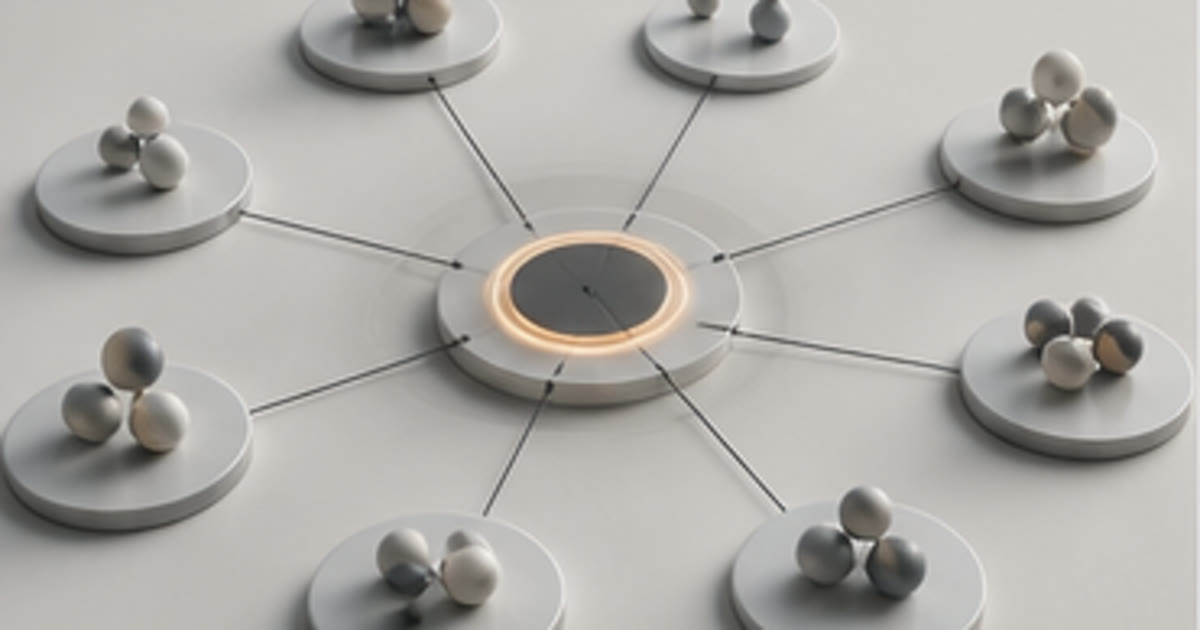
There is a particular quality to the moment when scattered work suddenly snaps into a shape. Not because anything has been reorganised, and not because a new piece has been added. Simply because, having done enough of the constituent work, the structure that was always implied becomes legible.
That is where December 2023 finds us. Not at an arrival, the work is nowhere near finished, but at a threshold where the whole is finally visible enough to describe honestly.
What the portfolio is actually for
Mustard Seed Group has never been straightforwardly a product company, a research operation, or a services firm. It is all three, deliberately, because the problem being worked on requires all three angles simultaneously.
The thesis, that technology, and now AI specifically, should increase human capability rather than replace or diminish it, is not best tested by building one thing in one category. It is best tested by running the thesis through products aimed at businesses, products aimed at consumers, research conducted without commercial pressure, and services work that puts patterns in front of real clients fast.
That structure was always the intention. What changes at the end of 2023 is that the intention is now visible in the actual portfolio, not just in planning documents. The pieces have been built long enough that their relationships are becoming apparent.
Orbit and Orion: the commercial core taking shape
Orbit started as a product thesis: that the surface businesses use to execute commercial work, from finding a customer to delivering on a commitment, was fragmented in ways that created predictable failure modes. Not data problems, not CRM problems specifically, but operating surface problems. The tooling required businesses to assemble coherence from pieces that were never designed to form a whole.
Building towards a solution to that problem takes a particular kind of intelligence layer underneath. You cannot make a commercial operating surface smarter by adding dashboards. The intelligence has to be embedded in the workflow: understanding context, surfacing the right information at the right moment, maintaining memory of what matters across a commercial relationship.
That is where Orion sits. Orion is not a feature of Orbit. It is the research and infrastructure layer that makes the Orbit thesis possible to fulfil. Through 2023, the relationship between these two products has become clearer not as an architectural choice on a whiteboard, but as a practical consequence of building both. Orbit defines what commercial intelligence needs to do. Orion is the attempt to provide it. The feedback runs in both directions: Orion's capabilities shape what Orbit can offer; Orbit's requirements sharpen Orion's research priorities.
This is a different relationship than most software companies have between their product and their AI layer. It is not a product that has added AI. It is an intelligence system and an operating surface being built together around a shared understanding of what commercial execution actually requires.
TUXX as proof of concept and pattern engine
Research can tell you whether something is possible. Client work tells you whether it is useful in the conditions that actually exist. TUXX exists to create that second kind of evidence.
As the services and custom systems division, TUXX takes patterns developed in the research and product work and deploys them in live commercial environments. Some of those patterns work as expected. Some require modification. Some reveal gaps in the underlying approach that feed directly back into Orbit and Benediction Lab.
Through 2023, TUXX has served an important function beyond revenue generation: it has validated the Orbit thesis in real business conditions. The commercial problems Orbit is being built to solve are not hypothetical. They are problems that show up consistently in the kinds of organisations TUXX works with: problems around execution coherence, handoff quality, context loss between stages of a commercial workflow. The pattern recognition from client work is one of the more valuable inputs the broader portfolio receives.
Pattern Up, the sub-product operating under TUXX, reflects a related logic: that some of what is learned through client engagements can be productised into something more systematic. The services arm and the product arm are not in separate orbits; they inform each other continuously.
Benediction Lab: the long research
If TUXX is where the thesis meets current commercial reality, Benediction Lab is where the thesis meets longer-term technical possibility.
The research areas, agents, memory systems, GUI control, autonomous product development, are not disconnected from the rest of the portfolio. They are, in most cases, pointing directly at problems that Orbit and Orion will need to solve in the next few years, and that the broader AI field is only beginning to take seriously.
Memory is a useful example. The dominant paradigm through much of 2023 has been context windows: give the model more information at inference time and it will produce better outputs. This is useful but it is not memory. Memory is about what persists, what is retrievable, what shapes future behaviour based on past experience. Building products that require genuine memory, commercial relationships that span months, consumer habits that evolve, agent behaviours that should improve with use, means the shallow version of the problem is not sufficient.
Benediction Lab works on this not as an academic exercise but because Orion needs it and Orbit depends on it. The research and the commercial ambition are not separate tracks.
All Purpose and CheekyGains: one consumer thesis, two expressions
The consumer side of the portfolio operates on a different logic than the B2B side, but not on a different thesis.
All Purpose is the broader ecosystem: part platform, part media, part cultural project. Its directions (music, Relay, Horizon, Made It Out) reflect a consistent belief that consumer products in the current environment need to do more than provide utility. They need to hold attention because they are genuinely worth holding attention. That requires cultural fluency alongside technical quality.
CheekyGains sits within that ecosystem as a fitness and performance platform, with a specific focus on accountability, standards and coaching. Naira, the AI performance coach embedded in CheekyGains, represents the consumer application of the capability thesis. The question being worked on is not whether an AI can generate a workout plan. The question is whether an AI coach can actually improve someone's performance over time, whether it can hold someone to a standard they have chosen for themselves in a way that is useful rather than annoying.
The shared infrastructure between CheekyGains and the wider All Purpose ecosystem is one of the things that has become clearer in 2023. Consumer behaviour data, engagement patterns, what keeps people returning versus what makes them drop: this is the material that a consumer platform generates continuously, and it is material that informs product decisions across the portfolio.
The shape that is emerging
What becomes visible at year-end is something that was always the plan but was not yet the reality: a portfolio in which the research, the B2B product work, the services division and the consumer work are not parallel projects maintained in isolation, but a system in which insights flow between them.
Benediction Lab's memory research is relevant to Orion. Orion's architecture is relevant to Orbit. TUXX's client work validates and sharpens Orbit. CheekyGains' consumer patterns inform All Purpose's product directions. The connections are not forced. They are the natural consequence of having built far enough into each piece that the relationships between them have had time to become real.
The phrase that keeps returning is coherence, not because everything is aligned in some corporate strategic sense, but because the logic is now visible. Someone looking at the portfolio from the outside should be able to see why these specific products and research areas exist together, rather than reading the list and finding it arbitrary.
What this does not mean
Coherence is not completion. Several pieces of the work are early. Several research questions are genuinely open. The portfolio has a logic, but that logic still has to be proven in execution.
There is also a version of year-end reflection that tips into mythology-making: the story where scattered fragments were always secretly a masterpiece waiting to be recognised. That is not the account being offered here. The work has been difficult, non-linear, and has produced its share of dead ends. The coherence that is visible now was not visible three years ago because it did not yet exist. It has been built into existence through accumulated work, not discovered as a pre-existing truth.
What December 2023 offers is a different kind of clarity than certainty. It is the clarity of knowing what the work is for and being able to trace how each piece connects to that purpose. That is a useful state to be in as the next phase of building begins.
The thesis is human capability. The portfolio is the attempt to prove it.