Founder letter
From projects to portfolio
Year-end note on portfolio clarity
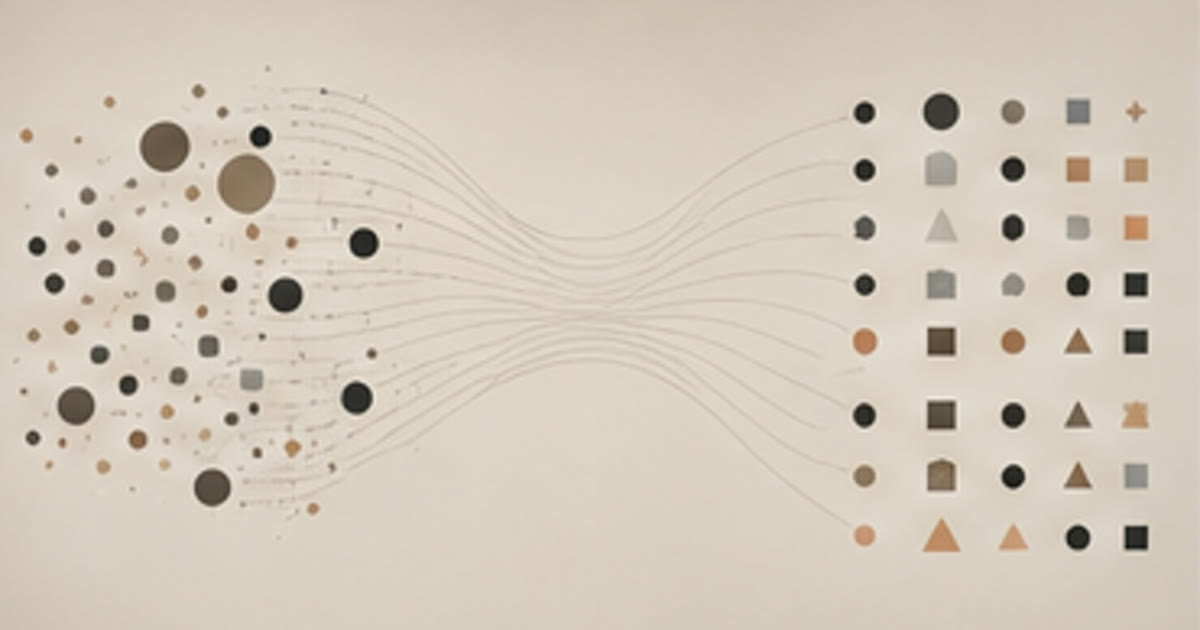
There is a difference between having projects and having a portfolio. Projects are individual bets. A portfolio is an argument: one that says these things belong together, that together they amount to something more than the sum of their individual outputs.
It has taken time to understand which of those two things we were actually building.
The early years were louder than they looked
Between 2015 and 2017, the work was fast. A lot of building, a lot of shipping, a lot of learning what people would or would not use. The experiments touched consumer software, tools for small teams, workflows that were supposed to make things easier. Some of them worked well enough. Most of them taught us something useful about what we were actually interested in, which turned out not to be the product itself but the system underneath it.
The honest account of that period is that we were trying to figure out our thesis. We had energy and we had some early technical skill, but we had not yet understood what connected the work. Products came and went. What stayed was a growing intuition that the interesting problem was not "what should we build next" but "what are we actually trying to increase in the world?"
The answer, slowly, was capability. Human capability, specifically. The capacity of people to think more clearly, execute more precisely, create more deliberately, and build things that last.
That thesis was not arrived at cleanly. It was discovered through friction.
Method before product
The 2018–2020 period was quieter and more structural. The output was less visible but more durable. We were working out how to build properly: how to research before committing, how to test without over-investing, how to hold a long-term direction without being rigid about the specific form it should take.
This was also the period when the AI research landscape started to shift in ways that were going to matter. The work coming out of machine learning labs was not yet producing the kinds of tools that would reach product-level usefulness, but the shape of what was becoming possible was becoming legible to anyone paying close attention. Attention mechanisms, large-scale language models, learned representations of context: these were not just academic curiosities. They were the early form of something that would change what software could do.
What we drew from that period was not a specific technology bet. It was a more foundational conviction: that intelligence, structured, augmented, tool-using intelligence, was going to become a commercial and institutional resource, and that building things in that direction early was not speculation but positioning.
The middle period: product clarity arrives slowly
By 2021 and into 2023, the shape of the portfolio started to become clearer. Not because we planned it out in a single session, but because the individual pieces began to reveal their relationships to each other.
Orbit had been developing as an idea long before it had a name. The underlying need, a commercial operating surface that could take a business from first contact with a potential customer through to a launched and running product, was something we had seen the absence of repeatedly in the environments around us. CRMs manage relationships. Project tools manage tasks. Nothing managed the full commercial execution arc as a single coherent system. Orbit was the answer to that gap.
Alongside Orbit, a question about intelligence infrastructure kept surfacing. If Orbit was the commercial operating surface, what would make it genuinely intelligent rather than merely organised? The answer to that question became Orion: the AI layer responsible for memory, reasoning and the kind of contextual continuity that makes the difference between a tool that stores data and one that actually understands what a business is trying to do.
TUXX emerged as a different kind of piece. Not a product in the same sense as Orbit, but a pattern-testing environment. Building custom AI systems and software in live client environments forces a rigour that pure product development does not. The feedback is harder, the constraints are real, and the things that work become candidates for absorption into the broader system.
The consumer side of the portfolio developed on a separate track. All Purpose was never going to be a B2B product. It was oriented towards something different: the way people relate to performance, culture, and the everyday business of staying capable at a personal level. CheekyGains as a fitness and accountability platform, Naira as the AI coaching layer inside it: these were not the same kind of product as Orbit, but they were asking a version of the same question. What does it look like to genuinely improve someone's capacity to do what they set out to do?
Research as infrastructure
Benediction Lab did not arrive late in this story, but it took time to understand its role. The instinct was that research should be close to product: not entirely detached, not purely academic, but working on the problems that the products would need to have solved two or three steps ahead of where they currently were.
Agents, memory systems, GUI control, autonomous product development: these are not future concepts. They are active areas of work that already affect what is possible to build today. The lab's function is to make sure that the thinking stays ahead of the building, and that the building stays grounded in the thinking.
That relationship, between a research function and a commercial operation, is one of the things that distinguishes an institution from a collection of startups. Startups typically cannot afford to maintain serious research capacity unless they are very well funded. An institution can, if it is structured correctly and if the research is genuinely feeding the product work rather than running in parallel with it.
What the portfolio looks like at the end of 2025
Looking at the full picture now, in December 2025, the portfolio makes sense to us in a way that it did not during the earlier years. The parts connect.
Benediction Lab generates understanding about what intelligence systems can do and how they should be structured. Orion translates that understanding into practical AI infrastructure. Orbit puts that infrastructure to work as a commercial operating system. TUXX pressure-tests patterns in real environments and surfaces what holds. The consumer side, All Purpose, CheekyGains, Naira, extends the capability thesis into a different domain and a different audience.
Mustard Seed Group as a holding entity is not a convenience of administration. It is the thing that keeps the centre legible. The group is organised around a thesis, not a market category. The thesis is that increasing human capability, genuinely, durably, in ways that make people more effective rather than more dependent, is a worthwhile and commercially serious project.
That thesis does not require every product to carry the same branding, target the same audience, or operate in the same market. It requires the products to share a direction.
What 2026 looks like from here
From this position, 2026 looks like a year of consolidation and deepening rather than expansion. The portfolio has its shape. The priorities now are making each component better at what it does, making the connections between components more coherent, and continuing to build the research infrastructure that keeps the whole thing honest.
There is no shortage of surface area to chase. New model capabilities, new agent patterns, new consumer behaviours, new commercial needs: the environment continues to change faster than any individual organisation can fully track. The discipline is not to respond to all of it but to stay anchored to the capability thesis and use it as the filter.
Some things that look like opportunities are genuinely relevant to what we are building. Many are not. The ability to make that distinction quickly, without being either dismissive or credulous, is one of the things that the earlier years were training us towards.
The portfolio is not finished. An institution that is worth building takes longer than a decade to build properly. But we know what we are building now in a way that we did not ten years ago. That is not a small thing.
The work continues.